Beneath the Surface of Submission Streams: Exploring Data Flow Patterns in Layered Promotional Reward Structures
Morgan Lange · Nov 1, 2026

Beneath the Surface of Submission Streams: Exploring Data Flow Patterns in Layered Promotional Reward Structures
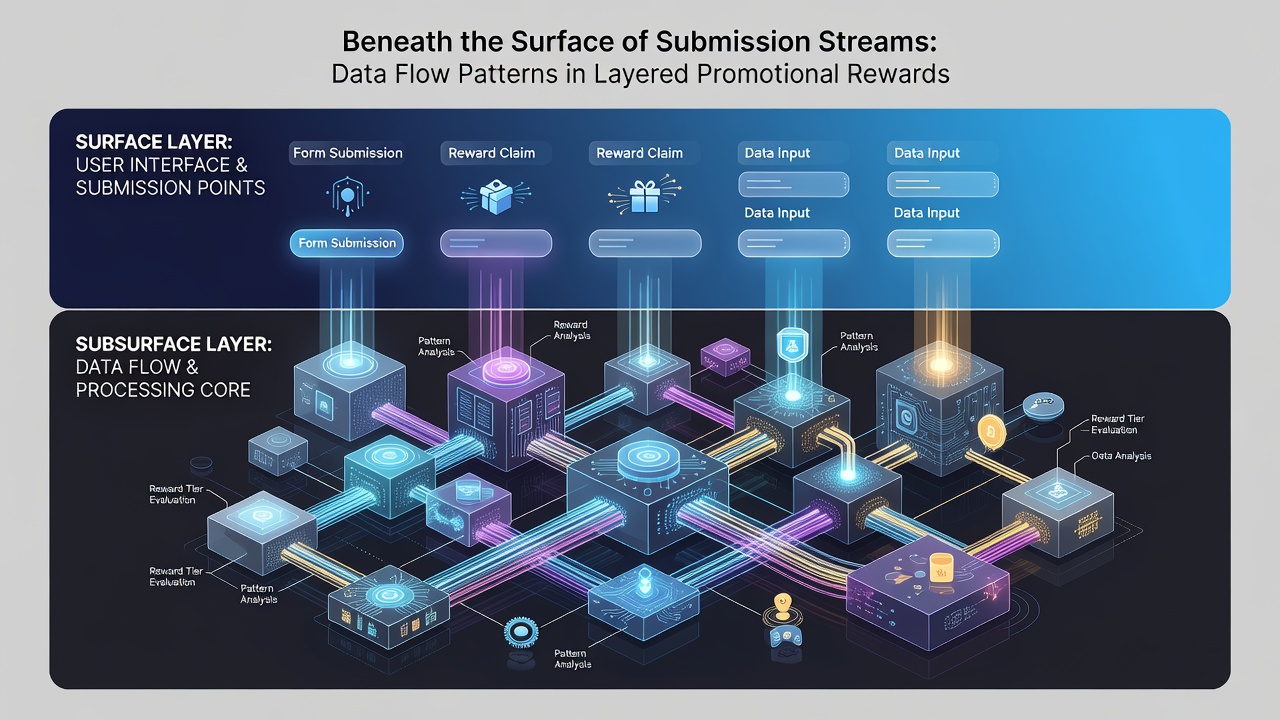
Submission streams in promotional reward structures carry user entries through multiple verification stages before any prize allocation occurs, and observers note that these flows often follow predictable yet intricate patterns across digital platforms. Data enters at various touchpoints, moves through validation layers, and branches into reward tiers based on activity thresholds or partner integrations. Researchers have tracked how initial submissions from web forms, mobile apps, and affiliate links converge into centralized processing queues, where timestamps, geographic markers, and behavioral signals determine routing decisions.
Core Components of Submission Streams
Entry points collect raw information such as email addresses, account identifiers, and referral codes, then forward packets to authentication modules that cross-check against existing databases. According to the Federal Trade Commission, promotional programs must maintain clear separation between entry data and personal identifiers to comply with disclosure rules, which shapes how downstream systems handle each record. Once validated, entries split into parallel tracks: one for immediate eligibility checks and another for accumulation toward layered bonuses.
Layered structures add complexity because each tier applies distinct filters before releasing additional chances or escalating prize values. A single submission might pass through an initial random selection pool, then feed into a secondary queue triggered by minimum engagement metrics collected over days or weeks. Systems record these transitions with metadata tags that include source channel, time of arrival, and any partner offers attached at entry. This tagging allows platforms to trace lineage when disputes arise or when aggregate reports are generated for sponsors.
Observed Flow Patterns in Layered Systems
Traffic analysis reveals recurring sequences where morning submissions from certain regions cluster before afternoon spikes from other time zones, creating natural bottlenecks that influence processing latency. Studies of similar incentive platforms show that referral-driven entries often arrive in bursts, carrying duplicated identifiers that trigger deduplication routines before advancing further. These routines rely on hash comparisons and cross-references to prevent overcounting while preserving legitimate multi-channel participation.
November 2026 marks a period when several major campaigns activate holiday-themed reward layers, and data logs from prior cycles indicate elevated volumes coinciding with back-to-school and seasonal shopping surges. Platforms adjust queue priorities during these windows to accommodate higher submission rates without compromising verification integrity. External partners supplying co-branded entries add another dimension, because their feeds arrive via API calls that embed unique campaign codes used to allocate revenue shares later.
Verification and Integrity Mechanisms
Integrity checks operate at each junction, comparing incoming records against historical patterns to flag anomalies such as rapid-fire submissions from single IP ranges or mismatched device fingerprints. The Competition Bureau Canada has issued guidance on maintaining accurate records in promotional campaigns, emphasizing that transparent data handling reduces the risk of misallocated rewards. Once an entry clears these gates, it receives a unique tracking token that persists across subsequent layers, enabling end-to-end auditing.
Layered reward structures frequently incorporate conditional branches where accumulated points unlock higher-value draws or bonus entries. Data flows into these branches only after threshold calculations complete, which depend on aggregated counts refreshed at regular intervals. Observers note that peak processing loads occur when multiple partner feeds synchronize, requiring temporary scaling of server resources to maintain sequence integrity. Any interruption at this stage can shift entire cohorts of entries into delayed queues, altering their relative position in random selection processes.
Network and Timing Influences on Data Movement
Latency between distributed affiliate systems and central reward engines affects the order in which entries appear in selection pools, even when timestamps are normalized. Reports from academic research on distributed ledger applications in marketing incentives highlight how message scheduling intervals create micro-variations that accumulate across large participant bases. These variations become measurable when analysts compare entry timestamps against final reward disbursement logs.
Cross-border campaigns introduce additional routing considerations because regulatory requirements differ by jurisdiction, prompting platforms to segment streams early and apply region-specific compliance filters. Entries originating from one market may travel through dedicated pathways before merging with domestic flows for final prize determinations. This segmentation preserves audit trails while allowing unified reporting for sponsors who operate across multiple territories.
Conclusion
Patterns within submission streams reflect deliberate architectural choices that balance speed, compliance, and fairness across promotional reward ecosystems. Tracking these flows provides sponsors and platform operators with insights into operational efficiency and participant behavior without revealing individual identities. As layered structures grow more interconnected, the ability to map data movement from initial capture to final allocation remains central to maintaining trust in these programs.