When Algorithms Choose Winners: Unpacking Bias Detection in Promotional Randomizers
Ines Hoffmann · Sep 20, 2026
When Algorithms Choose Winners: Unpacking Bias Detection in Promotional Randomizers
Promotional randomizers power many daily contests and sweepstakes by selecting winners through algorithmic processes that rely on random number generators, and these systems operate across platforms where entries accumulate from multiple sources including partner promotions and direct submissions. Data from industry reports indicate that implementation choices in the underlying code can introduce patterns that deviate from true randomness even when the intent remains uniform distribution across all participants.
Core Mechanics Behind Random Selection in Contests
Random number generators in promotional software typically draw from pseudorandom sequences seeded by system clocks or external entropy sources, and researchers have documented how limited entropy pools or predictable seed values create repeatable output sequences under certain conditions. Observers note that large-scale platforms process thousands of entries per minute during peak periods, which places additional demands on the generator to maintain statistical independence between successive draws.
Studies from academic institutions reveal that hardware-based true random number generators appear in some enterprise systems while many smaller promotional operators continue to use software implementations that undergo periodic audits. Those audits often apply suites of statistical tests originally developed for cryptographic applications, and the results determine whether the output passes thresholds for uniformity and independence.
Common Sources of Detectable Bias
Bias emerges when code paths favor particular numerical ranges due to floating-point rounding, modulo operations that unevenly map values, or insufficient reseeding intervals during extended drawing sessions. Figures from testing laboratories show that certain older implementations failed chi-square and runs tests at rates higher than expected under null hypotheses of randomness, prompting updates to selection algorithms.
One documented case involved a regional campaign where the randomizer consistently under-selected entries submitted during specific time windows, and subsequent code review traced the pattern to a timestamp collision in the seeding routine. Similar incidents have led developers to adopt external randomness beacons maintained by standards bodies, which supply fresh entropy at regular intervals.
Detection Techniques and Testing Protocols
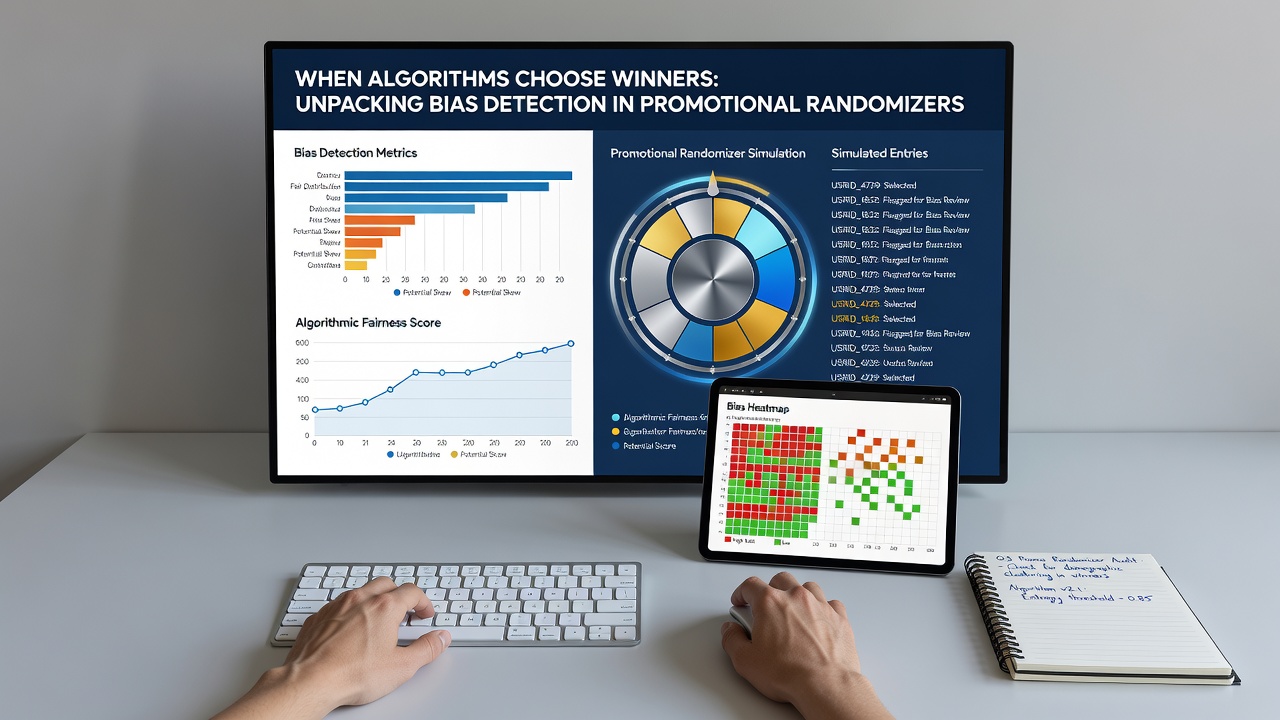
Bias detection begins with collection of large sample sets from the randomizer under test conditions that mirror live contest volumes, and analysts then apply batteries of tests including frequency, serial, and poker evaluations to identify departures from expected distributions. Research indicates that combining multiple test suites increases the likelihood of surfacing subtle correlations that single-method approaches might miss.
Automated monitoring tools now integrate into some promotional platforms so that ongoing draws undergo real-time statistical sampling, and alerts trigger when metrics drift beyond predefined control limits. Those who maintain these systems report that integration with logging frameworks allows reconstruction of drawing sequences for post-event verification without exposing participant data.
Industry Standards and Upcoming Developments
The National Institute of Standards and Technology maintains guidelines for random number generation that many promotional software vendors reference during development cycles, and compliance documentation often forms part of audit packages submitted to platform operators. In parallel, updates scheduled for release in September 2026 from international standards organizations aim to incorporate newer entropy assessment methods that account for distributed system architectures common in modern contest platforms.
Academic papers published through research consortia in Canada and Australia have examined how regulatory frameworks in those regions influence testing frequency and transparency requirements for promotional randomizers, and the findings suggest that jurisdictions with mandatory disclosure of test results experience fewer post-draw challenges from participants.
Conclusion
Bias detection in promotional randomizers continues to evolve alongside advances in statistical methods and computing resources, and stakeholders across the sector rely on documented testing protocols to maintain selection integrity. Ongoing collaboration between standards organizations, developers, and platform operators supports consistent application of these practices as contest volumes and technical complexity increase.